The Complete Guide to Calculating Soil, Mulch & Sand for Landscaping Projects (With Free Calculator Tools)
In the landscaping world, “guesstimating” is a luxury no one can afford. Whether you’re a professional contractor aiming for pricing accuracy on a tender or a homeowner prepping for a weekend turf lay, the math matters.
A 20mm error across a 100m² backyard doesn’t sound like much, until you realise you’re two cubic metres short and facing a second $150 delivery fee.
At Soilworx, we’ve seen every measurement mishap in the book. This guide (and our Online Volume Calculator) is designed to ensure your project estimation is flawless from day one.
1. Understanding Compaction & Settlement in Volume Calculations
The biggest mistake in soil volume calculations is forgetting that soil is alive and “fluffy.” When it leaves our yard, it’s aerated. Once it hits your garden and you tread on it or water it in, it settles.
- The “Rule of 15%”: For garden soils and turf underlay, always add 15% to your raw volume.
- Formula for Pros:

- Why? Without this buffer, your finished soil level will sit below your edging or pavers once the first rain hits.
2. Sand Volume: Understanding Compaction Ratios
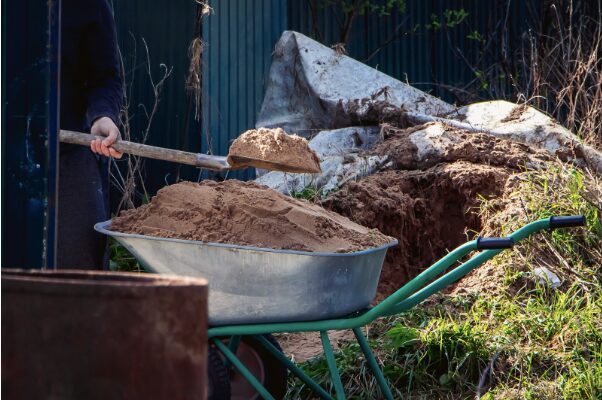
Unlike mulch, sand and crushed rock are designed to be packed tightly. If you are prepping a base for a driveway or a paving project, density understanding is your best friend.
- Bedding Sand: Usually requires a 10% “fluff” factor.
- Crushed Rock/Road Base: Can compact by up to 20-25%.
- Sand is sold by the tonne but measured by the m^3. One cubic metre of wet sand can weigh up to 1.9 tonnes, whereas dry sand is closer to 1.6 tonnes. If you don’t account for moisture weight in your cost planning, your delivery truck might be overloaded.
3. Mulch Coverage: Beyond the Aesthetics
Mulch coverage isn’t just about hiding the dirt; it’s about thermal regulation.
- The Sweet Spot: 75mm is the industry standard.
- The Math: 1m^3 of mulch covers 13.3m^2 at 75mm depth.
Pro Tip: If you’re using a fine mulch (like Red Mulch), it breaks down faster. If you’re using a recycled timber or chunky bark, it lasts longer but

4. Accurate Landscaping Cost Planning: How to Account for Hidden Expenses
True pricing accuracy involves more than just the price per scoop. To avoid budget blowouts, factor in:
- Access Issues: Can a 10-cubic-metre tipper fit down your side-gate? If not, you’re looking at multiple small-truck deliveries, which increases costs.
- Product Weight vs. Volume: Heavy aggregates cost more to transport than light mulches.
- The “Short-Load” Fee: Often, it’s cheaper to buy an extra half-metre of soil than to pay a surcharge for an under-filled truck.
5. Tool Usage: Let the Soilworx Volume Calculator Do the Heavy Lifting
Why do the long-form math when we’ve built the tech for you? Our online volume calculator handles the complex geometry of modern landscapes.
| Shape | Data Needed | Best For |
| Rectangular | L x W x D | Lawns, standard garden beds |
| Circular | Radius x D | Tree rings, fire pit zones |
| Triangular | Base x Height x D | Corner blocks, irregular garden edges |
How to use it like a pro: Measure your area in meters, not centimetres. Entering “10” for depth instead of “0.1” (for 100mm) is the fastest way to accidentally order enough soil to bury your house!
The Verdict: Prep Your Soil, Mulch & Sand Right the First Time
Successful landscaping prep is 90% calculation and 10% perspiration. By mastering these volumes, you ensure your project looks professional and stays under budget.
Stop guessing and start measuring. Use the Soilworx Volume Calculator right now to get an instant, accurate material list for your next project.